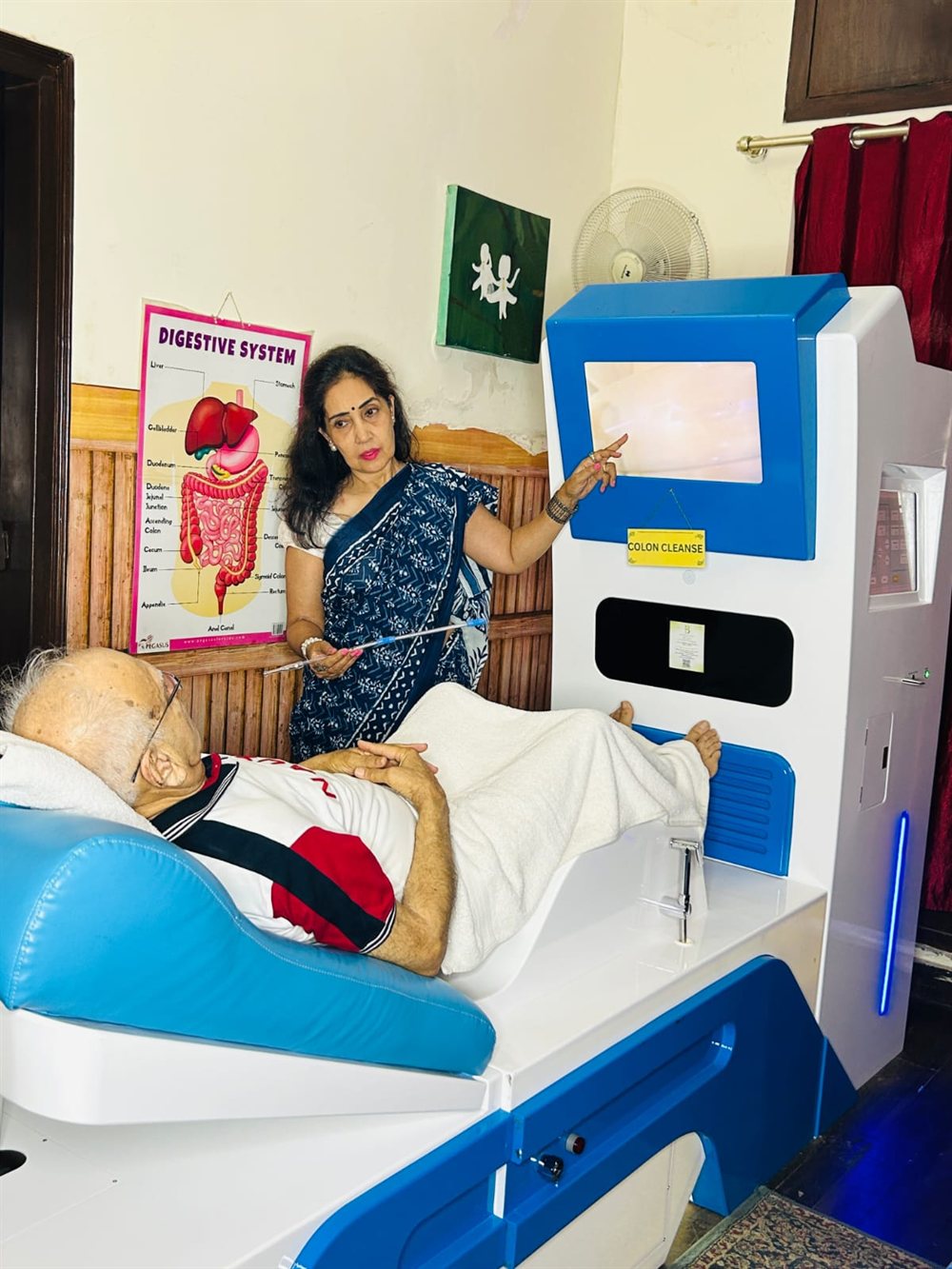
Colon hydrotherapy gently flushes the large intestine with warm, filtered water through a small tube. Many people feel lighter and less bloated afterwards, and that comfort is real. But there is no good evidence that it removes toxins, boosts immunity or helps with weight loss, and it carries some risks. That is why, at Bliss, I offer it only after a consultation and as one small part of a wider plan.
As a certified colon hydrotherapist, I am often asked two questions in the same breath: “Will it clean me out?” and “Is it safe?” This article gives you the honest answers I give my patients at Dr. Bali’s Bliss in Hauz Khas, New Delhi, including the parts that wellness websites usually leave out.
What is Colon Hydrotherapy?
Colon hydrotherapy, also called colonic irrigation or a colonic, is a procedure in which warm, filtered water is slowly passed into the large intestine and then released, carrying out loose stool and gas. It is different from the bowel preparation you drink before a colonoscopy, which empties the whole gut from above.
At Bliss, a session takes about 45 minutes in a private room. You lie comfortably while a therapist guides a thin, single use nozzle a short way into the rectum. Water fills the colon in gentle cycles and is then released, either continuously (an open system) or after a minute or two (a closed system). The therapist adjusts the water pressure and temperature throughout, and most people feel only mild fullness or pressure.
Benefits for Body and Mind
The honest benefit of colon hydrotherapy is short term comfort: many people feel lighter, less bloated and less heavy after a session, especially when the bowel has been sluggish. Beyond that, the claims you read online go further than the evidence.
What the research says
- Major hospitals such as Mayo Clinic state that there is no evidence colon cleansing removes toxins or boosts energy or immunity. Your liver, kidneys and bowel already clear waste every day.
- No colonic system has been approved by the US FDA for routine cleansing to improve general wellbeing.
- A small pilot study of 18 people with irritable bowel syndrome found that regular irrigation eased pain, constipation and diarrhoea. It used a home irrigation device twice a day, which is quite different from a clinic colonic, so it is an early signal rather than proof.
- It is not a weight loss treatment. Any drop on the scale the next day is water and stool, not fat.
What I see in my patients
Where colon hydrotherapy helps most, in my experience, is as a starting point. Someone who has felt bloated and heavy for months often feels relief after the first few sessions, and that relief gives them the motivation to change how they eat, drink and move. The mind matters here too. Many patients tell me they feel calmer once the constant discomfort eases, and that makes it easier to stick to a new routine.
What colon hydrotherapy cannot do is teach your bowel to work well by itself. That only comes from food, water, movement, sleep and less stress, which is why I never offer it on its own.
Supporting Therapies & Personalised Care
At Bliss, every course of colon hydrotherapy begins with a consultation with me, and in many cases we decide it is not needed at all. I ask how often you open your bowels and what the stool looks like, what you eat and when, how much water you drink, how you sleep, what worries you, and which medicines and laxatives you take. I also check for any condition that makes colonics unsafe.
When it does suit someone, first time clients usually have three sessions over seven to ten days, with light, mostly vegetarian meals before and after. It is paired with homeopathy, an Ayurvedic oil massage and changes to food and routine. After the course, I give a probiotic and a diet plan to support healthy gut bacteria. You can read the full details, including the open and closed systems, on our colon hydrotherapy service page.
For people who want a structured reset, colon hydrotherapy can be one part of our supervised detox programmes. For long standing gas and bloating, a gut microbiome test and a plan from our nutrition team often tell us more than a colonic ever could. And if constipation is your main problem, start with the food and habit changes in my guide to constipation treatment.
Safety & Side Effects
Colon hydrotherapy is generally well tolerated when the person is checked first and the session is done gently with proper equipment, but it is not free of risk. Mild cramping, bloating, nausea or feeling tired and light headed afterwards are the most common effects, and they usually pass within a few hours.
Rare but serious risks include dehydration and changes in body salts (electrolytes), which can be dangerous for people with heart or kidney disease, infection, and a tear in the wall of the bowel. To lower these risks, we use single use kits for every client, filtered water at a controlled temperature and gentle pressure, and we ask you to drink enough water before and after. I do not recommend frequent “maintenance” colonics, week after week, for anyone.
Who should not have colon hydrotherapy
- Pregnancy.
- Recent surgery on the abdomen or bowel.
- Active ulcerative colitis or Crohn’s disease, or diverticulitis.
- Severe haemorrhoids, an anal fissure, or a suspected blockage of the bowel.
- Bowel cancer, or any symptom that has not yet been checked by a doctor.
- Serious heart or kidney disease, or medicines that affect your fluid and salt balance, such as water tablets, unless your doctor agrees.
When to See a Doctor
A change in your bowels can be a sign of something that needs medical tests, not a cleanse. Please see a doctor, ideally a gastroenterologist, before trying colon hydrotherapy if you have:
- Blood in your stool, or black, tarry stools.
- Weight loss you cannot explain, or a low blood count (anaemia).
- A change in your bowel habit that lasts more than a few weeks, especially after the age of about 50.
- A family history of bowel cancer or inflammatory bowel disease.
- Severe or worsening abdominal pain, or vomiting with no stool or wind passing.
- Constipation or diarrhoea that wakes you at night.
After a session, seek medical help straight away if you develop severe abdominal pain, a fever, heavy bleeding from the rectum, or dizziness that does not settle. At Bliss, we work alongside your own doctor, and we never ask anyone to stop prescribed medicine.
Frequently Asked Questions
Does colon hydrotherapy wash away good gut bacteria?add
It can disturb the bacteria in the lower bowel for a short time, because water flushes out stool that contains them. Healthy gut bacteria usually recover within days, helped by fibre rich food and fermented foods such as curd. This is one reason I avoid frequent colonics and give a probiotic and diet plan after a course.
Is colon hydrotherapy the same as an enema?add
No. An enema uses a small amount of liquid, given once, to empty the rectum and the lowest part of the colon. Colon hydrotherapy uses larger volumes of water in repeated fill and release cycles over about 45 minutes, and reaches further along the large intestine.
Can I do a colon cleanse at home?add
I do not recommend home colon cleanses. Kits and coffee enemas carry the same risks as a clinic colonic without anyone checking you first, and coffee enemas have been linked to serious harm. Laxative teas used often can make the bowel lazier over time. Kiwifruit, prunes, enough water and regular movement are far safer ways to help a sluggish bowel.

About the author: Dr. Poonam Bali, B.H.M.S., P.G. (Homoeopathy), is a gold medalist homeopath and London trained cosmetologist who founded Dr. Bali’s Bliss in Hauz Khas, New Delhi in 1996. She has more than 30 years of experience in integrative and holistic health, with a special interest in digestive health. She is a certified colon hydrotherapist.
Disclaimer: This article is for general information and does not replace a medical consultation. Please speak to your doctor before trying colon hydrotherapy if you have any health condition, and before changing any prescribed medicine.