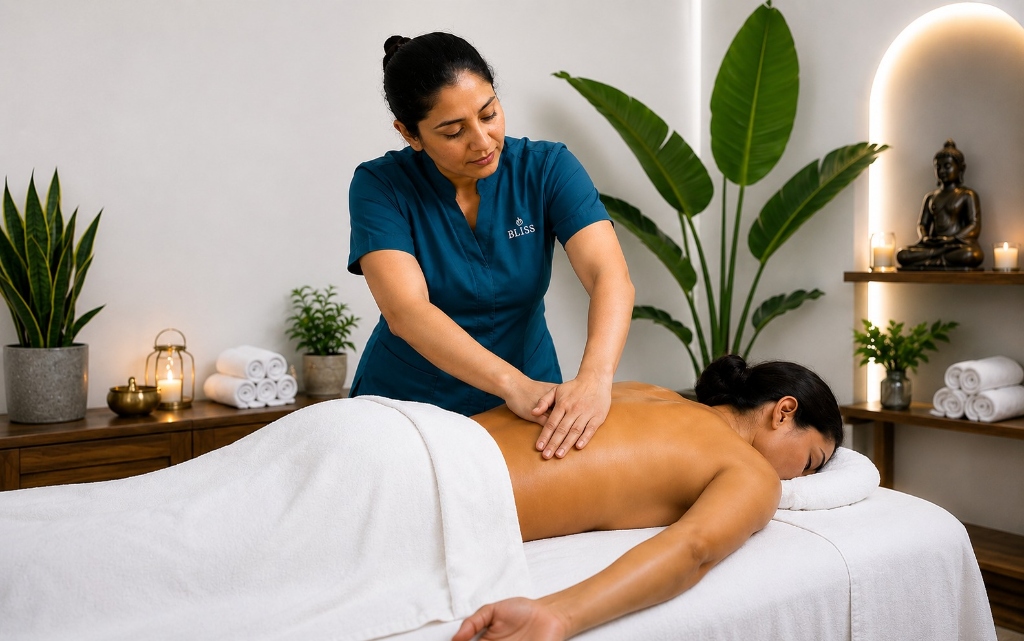
Massage will not cure acid reflux, and it does not replace treatment for GERD. What gentle work on the diaphragm and upper abdomen can do, together with better breathing and meal habits, is ease symptoms for some people, especially when stress, shallow breathing and a tight upper belly are part of the picture.
Patients often ask me whether a massage can fix their acidity. My honest answer is that it can help, but rarely on its own. In more than 30 years at Bliss, the people who do best are the ones who use bodywork to calm the body and learn to breathe properly, while they also change when and how they eat. This article explains what acid reflux massage involves, what the research really shows, who it suits and who should avoid it.
What Is Acid Reflux Massage Therapy?
Acid reflux massage is slow, light bodywork on the upper abdomen, the lower ribs and the upper back, aimed at relaxing the muscles around the stomach and the diaphragm. It is very different from a deep tissue massage. The pressure on the abdomen is gentle, and nothing is pushed hard into the stomach.
The diaphragm matters here because it wraps around the lower end of the food pipe and acts like an outer valve that helps keep stomach acid down. When you are anxious, sit hunched over a laptop or breathe only from the chest, that area can stay tight and work less well. A session usually combines:
- Soft, clockwise strokes over the abdomen to relax the belly and ease trapped gas.
- Gentle release along the lower edge of the ribs, where the diaphragm attaches.
- Work on the upper back, neck and shoulders, where people with reflux often hold tension.
- Coaching in slow belly breathing, so you can keep the benefit going at home.
Osteopaths use a more specific technique on the diaphragm, called visceral or osteopathic manipulation. The studies below mostly tested that technique, so the results do not automatically apply to every abdominal massage.
Key Benefits and What the Evidence Shows
The research is small but encouraging. Most of it looks at hands on work on the diaphragm or at breathing training, rather than at general massage.
- In a trial of 38 people with GERD, an osteopathic technique on the diaphragm raised the pressure of the lower food pipe valve straight after treatment, compared with a sham technique.
- In a trial of 60 people with GERD, a manual technique over the lower food pipe valve improved reflux symptoms a week after treatment, compared with a placebo touch.
- In a randomised trial, belly breathing after meals reduced the number of reflux episodes after eating and cut acid exposure in the food pipe.
None of these studies shows that massage heals the food pipe or replaces medicine. They do suggest that a relaxed, well trained diaphragm supports the body’s own barrier against reflux. In my patients, the benefits I see most often are:
- A calmer nervous system, which matters because stress makes reflux feel worse.
- Less tightness and bloating in the upper belly after meals.
- Less burping, especially in people who swallow air when they are anxious.
- Better sleep, and more awareness of posture through the day.
How It Works & Who Benefits
Timing is everything. We never work on the abdomen soon after a meal, so please eat lightly and come at least two to three hours after your last meal. You lie with your head and upper body raised on pillows rather than flat, because lying flat can bring acid up. A session at Bliss lasts about 45 to 60 minutes, and the last part is spent practising breathing that you can repeat at home.
Many people notice they feel lighter and calmer after the first session. Any change in reflux usually builds over several weeks, and only when the eating habits change too.
Who it suits
- Adults with mild or occasional heartburn, where stress, posture or bloating seem to play a part.
- People with a lot of burping or a tight, full feeling under the ribs.
- People already diagnosed with GERD who want gentle support alongside the plan from their own doctor.
Who should not have abdominal massage
- Anyone with any of the warning signs listed under “When to See a Doctor” below, until a doctor has checked them.
- Pregnancy. We can offer back and shoulder work instead, but not abdominal massage.
- Recent surgery on the abdomen, an abdominal hernia, or a large hiatus hernia, unless your surgeon agrees.
- Undiagnosed abdominal pain, a fever, or a known stomach ulcer that is still being treated.
A breathing exercise you can try at home
Sit upright after a meal. Place one hand on your chest and one on your belly. Breathe in slowly through your nose for about four counts, letting your belly rise while your chest stays still. Breathe out gently through your mouth for about six counts. Repeat for five minutes after your main meals. Our yoga teachers can check your technique if you find it hard.
Supporting Digestive Health
Bodywork helps most when the daily triggers are dealt with too. These are the changes I ask almost every reflux patient to make:
- Finish dinner at least three hours before you lie down. Late, heavy dinners are the most common trigger I see in Delhi.
- Eat smaller meals, and stop when you are about three quarters full.
- Raise the head end of your bed by about 15 to 20 cm, and try sleeping on your left side.
- Notice your own triggers. Common ones are fried and very spicy food, tea or coffee on an empty stomach, alcohol, chocolate and fizzy drinks.
- Avoid tight waistbands and bending forward soon after meals.
- Keep your weight in a healthy range, as extra weight around the waist pushes on the stomach.
If you eat well and still get heartburn, read my article on why healthy people get GERD. For simple kitchen remedies, see natural remedies for acid reflux.
How We Approach Reflux at Bliss
At Bliss, reflux massage is never a standalone treatment. Your first visit is a consultation with me, where we go through your day from waking to sleeping: meals, tea and coffee, exercise, sleep, stress and any medicines, including painkillers. If there is any warning sign, I will ask you to see a gastroenterologist before we start.
Where bodywork suits you, it is given by our trained therapists as part of our therapeutic massage service, alongside meal timing and food changes from our nutrition team and, where it fits, homeopathy. We work alongside your own doctor, and we never ask anyone to stop prescribed medicine on their own.
When to See a Doctor
Occasional heartburn after a heavy meal is common. Please see a doctor, ideally a gastroenterologist, before trying massage if you have:
- Difficulty or pain when swallowing, or food that feels stuck.
- Weight loss you cannot explain, or frequent vomiting.
- Vomiting blood, or black, tarry stools.
- A long lasting cough, hoarse voice or low blood count (anaemia).
- Reflux that starts for the first time after the age of about 45 to 55, or a family history of food pipe or stomach cancer.
- Heartburn more than twice a week for several weeks, or symptoms that return as soon as medicine stops.
Chest pain can be a heart problem, not reflux. If chest pain is new, or comes with breathlessness, sweating, or pain spreading to the arm or jaw, call 112 straight away.
Frequently Asked Questions
How many sessions of reflux massage will I need?add
Most people try four to six weekly sessions alongside changes in their eating habits, then review how they feel. If there is no change in your reflux after that, more massage is unlikely to help, and it is time to look again at the cause with your doctor.
Can I keep taking my antacid or PPI while having massage?add
Yes. Massage works alongside your medicine, not instead of it. Please do not stop or reduce a PPI such as pantoprazole or omeprazole on your own, because symptoms can bounce back. Your doctor can plan a slow reduction once your habits have changed.
Can massage fix a hiatus hernia?add
No. A hiatus hernia is when part of the stomach slides up through the diaphragm, and massage cannot move it back. Breathing exercises and lifestyle changes can still ease reflux symptoms with a small hernia, but a large one needs a doctor, and we avoid deep abdominal work.

About the author: Dr. Poonam Bali, B.H.M.S., P.G. (Homoeopathy), is a gold medalist homeopath and London trained cosmetologist who founded Dr. Bali’s Bliss in Hauz Khas, New Delhi in 1996. She has more than 30 years of experience in integrative and holistic health, with a special interest in digestive health and stress related gut problems.
Disclaimer: This article is for general information and does not replace a medical consultation. Please speak to your doctor before starting massage for reflux or changing any prescribed medicine.